

CRITICAL RISK MANAGEMENT

A Guide to Critical Risk Management for New Zealand Businesses

Practical Steps to identify, control and monitor the risks that could cause the most significant harm in your workplace

Every workplace has risks, but not every risk has the potential to change someone’s life forever.

Identifying your critical risks is only the first step. The ongoing challenge is making sure the right controls are in place, working effectively and understood by everyone involved.

In this guide, you’ll learn what critical risks are, how to identify them in your workplace, and how to put the right controls in place to manage them.

What Are Critical
Risks?

Critical risks include risks associated with specified hazards under the Health and Safety at Work Act (HSWA), or risks likely to result in death, a notifiable injury or illness, a notifiable incident, or a specified occupational disease if the risk occurs.

Identifying hazardous energy sources can help you recognise critical risks, but not all critical risks involve a release of energy. Harmful dusts and asbestos can also cause serious, long-term illness.

Examples of Critical Risks

Fire or Explosion

A fire or explosion causing severe burns, serious injury or death.

Falls from Height

A person falling from an elevated area under gravity, causing serious injury or death.

Electric Shock or Electrocution

Contact with live electrical equipment, causing serious injury or death.

Entanglement or Crushing

Moving machinery trapping, entangling or crushing a person.

Being Struck by a Vehicle

A moving vehicle striking a person, causing serious injury or death.
Exposure to Harmful Substances

Inhaling silica dust or asbestos fibres, causing serious, long-term illness.

These examples are not a complete list. Identify critical risks relevant to your workplace.

How To Identify Critical Risks

Every business has a different risk profile, so critical risks will vary depending on the work being carried out. A useful way to identify them is to look at where hazardous energy or substances exist, how they could be released or become uncontrolled, and who could be exposed. The 5 Ps provide a simple way to work through your business and identify where these situations may occur:

1.

People

The people doing the
work and anyone who
could be affected.

2.

Places

The sites, work areas and environments where work happens.

3.

Plant

The vehicles, tools,
machinery and
equipment involved.

4.

Processes

The methods, steps
and procedures used
to carry out the work.

5.

Products

The substances, materials and products being handled.

By looking at each of these areas, businesses can more easily identify where
critical risks may exist and where stronger controls may be needed.

Four Steps to Managing
Critical Risks

Identify And Document Your Critical Risks

Identify the risks that have the potential to cause serious injury or loss of life and record them in a critical risk register.

The register documents your critical risks and the controls needed to manage them. Review it regularly and update it whenever work activities, equipment or processes change.

Understand The Critical Controls That Prevent Serious Harm

Once critical risks have been identified, determine which controls prevent the uncontrolled release of hazardous energy or substances. The focus is on making sure the controls that prevent serious harm are in place and working effectively. These controls can be recorded against the critical risk in your critical risk register.

E.g. Machine guarding | Lockout and isolation | Traffic management | Fall protection

Apply, Verify and Maintain Your Critical Controls

Managing critical risks doesn't stop once controls are in place. Verification can be recorded through inspections, pre-starts, forms, equipment checks, observations or other monitoring activities. Critical controls need to be applied consistently, regularly verified and maintained over time.

It's also important to have procedures in place to reduce the consequences if prevention fails.

Communicate Your Critical Risks And Controls

Make sure workers and others who may be exposed understand the critical risks, the energy sources involved, and the controls or safeguards required to prevent that energy from being released or becoming uncontrolled. Communication should be recorded where appropriate.

This may include the training register, worker inductions, pre-start forms, or relevant inspection forms. This provides a clear record that the critical risks and required controls have been communicated and understood.
How Can Critical Risk Management Software Help You Manage Workplace Risks?

Keeping your critical risk information up to date can be difficult when it’s spread across paper forms, spreadsheets or different worksites. 

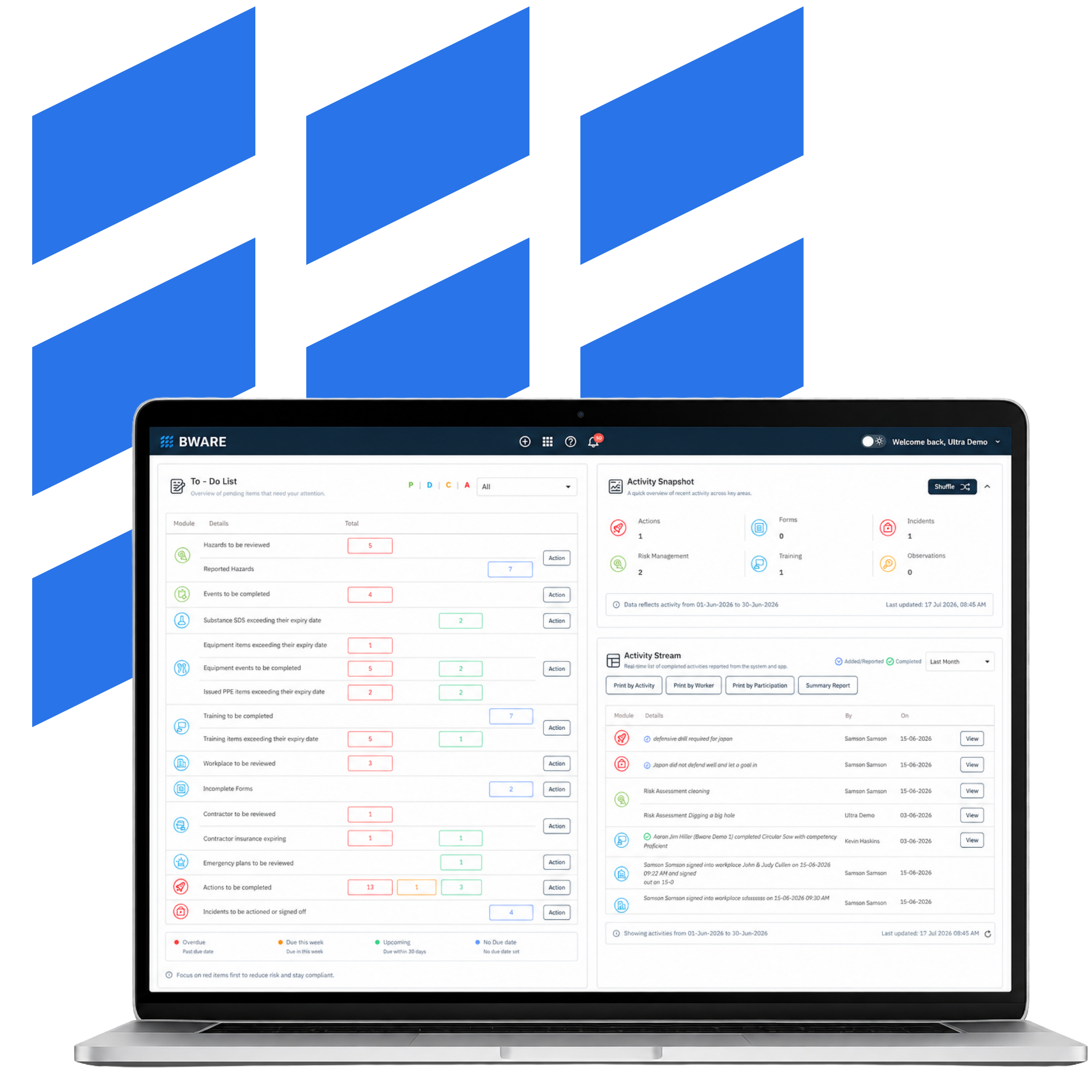
BWARE makes managing critical risks simpler by providing a central place to maintain a Critical Risk Register, including the identification of critical risks, the hazards involved, and the controls required to manage them. 

From there, you can replace paperwork with easy-to-use digital forms, complete inspections in real time and maintain accurate records that support compliance and continuous improvement.

What makes BWARE different is that it’s more than just software. From day one, a knowledgeable team of Kiwi health and safety specialists supports you by tailoring the system to your needs, providing practical advice, and helping you get the most value from the platform.

Critical Risk Management Software BWARE

Managing Critical Risks Starts
With The Right Approach

Critical risks may not be part of everyday work, but when they aren’t managed properly, the consequences can be life-changing. By identifying your critical risks, putting the right controls in place and regularly verifying that those controls are working, you can significantly reduce the likelihood of a serious incident.

No matter your industry, the right systems make critical risk management simpler and more consistent.

With practical health and safety software and expert support, BWARE helps businesses spend less time on paperwork and more time making sure the controls that matter most are in place.

See How BWARE Helps You Manage Critical Risks

Book a friendly, no-obligation demo to explore BWARE’s Critical Risk Register and discuss what your business needs.